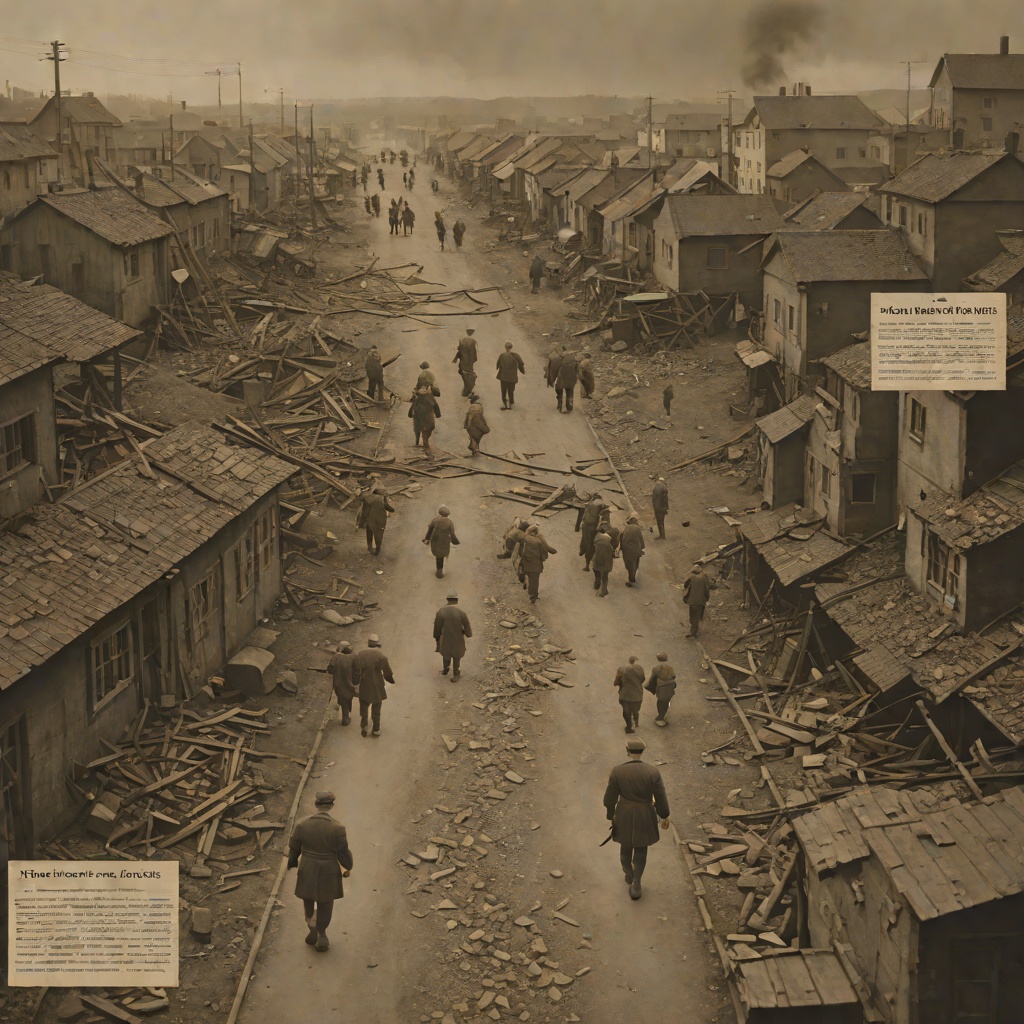
Lale and Gita flee Czechoslovakia
The Tattooist of AuschwitzThe flight of Lale and Gita Sokolov from Czechoslovakia in 1948 was the final act of a survival story that had begun six years earlier in the cattle cars bound for Auschwitz. It was a flight born not of the Nazi terror they had endured, but of the communist regime that now ruled their homeland, a regime that would arrest Lale on charges of economic sabotage and imprison him in the infamous Ilava Prison. The escape was a meticulously planned operation involving bribed officials, a feigned descent into madness, a false wall in a truck, and a password exchanged on a Vienna railway platform—a sequence that reads like a spy novel but was, for this couple, the price of their freedom and their commitment to a future in Israel.
The Arrest and the Charges
The chain of events that led to the escape began with the collapse of Lale's business partnership. When the marriage of his partner ended, the ex-wife, seeking revenge, reported Lale and Gita's activities to the authorities. On April 20, 1948, Lale was arrested and charged with "exporting jewelry and other valuables from Czechoslovakia." The arrest warrant was damning, claiming that Czechoslovakia "would have suffered untold economic losses" and that Sokolov would have obtained "significant values in money or possessions" from his "unlawful and marauding action." The irony was profound: while Lale had indeed been exporting jewelry and money, there was nothing financial in it for him. He had been giving the money away, funneling it to support the movement to establish a Jewish state in Israel. Two days after his arrest, his business was nationalized, and he was sentenced to two years in Ilava Prison, a place that had become notorious for holding political and German prisoners after the war.
The Feigned Madness and the Escape Plan
Imprisoned in Ilava, Lale faced a two-year sentence that must have felt like a lifetime. But he and Gita had been smart enough to stash some of their wealth, and Gita, working from the outside, used her contacts in the local government and judiciary to bribe officials. The plan they set in motion was audacious. One day, a Catholic priest came to visit Lale in prison. After a while, the priest asked the officials to leave the room so he could hear Lale's confession, which was sacrosanct and for his ears only. Alone with Lale, the priest told him to start acting as though he were going mad. If he did a good enough job, the officials would have to get a psychiatrist to see him. Lale followed the instruction, and before too long he found himself in front of a psychiatrist, who told him he was going to arrange for him to be given leave to go home for a few days before he "went over the edge and couldn't be brought back." A week later, Lale was driven to the apartment where he and Gita lived, told he would be picked up in two days to complete his sentence. That night, with the help of friends, they slipped out the back of their apartment building, each carrying a suitcase of possessions and a painting that Gita refused to leave behind—a painting of a Romany woman. They also took a large amount of money to give to a contact in Vienna who was destined for Israel. Then they hid behind a false wall in a truck taking produce from Bratislava into Austria.
The Vienna Handoff and the Journey West
The escape from Czechoslovakia was only the first leg of their journey. At a given time on a given day, they walked along a platform at the Vienna train station, looking for a contact they had never met. Lale described it as like something out of a le Carré novel. They muttered a password to several single gentlemen until finally one gave the appropriate response. Lale slipped a small briefcase of money to him, and then he disappeared. From Vienna, they traveled to Paris, where they rented an apartment and for several months enjoyed the cafés and bars of the city returning to its prewar self. Seeing Josephine Baker, the brilliant black American singer and dancer, perform at a cabaret was a memory Lale would always carry with him. He described her as having "legs up to here," indicating his waist. With no work available for non-French citizens, Lale and Gita decided to leave France. They wanted to go as far away from Europe as possible. So they bought fraudulent passports and set sail for Sydney, where they landed on July 29, 1949.
The Weight of the Past
The escape was a testament to the couple's resourcefulness and their unbreakable bond, forged in the crucible of Birkenau. It was also a flight from a Europe that held nothing but painful memories. Lale had changed his name to Sokolov, the Russian last name of his married sister—a name more readily accepted than Eisenberg in Soviet-controlled Slovakia. He and Gita were married in October 1945, and they set up home in Bratislava, where Lale started importing fine fabrics—linen, silk, cotton—from throughout Europe and Asia. The business grew, and they lived well, dining at the best restaurants and vacationing at resorts around the Soviet Union. But the past was never far away. Lale's imprisonment in the Strafkompanie from June 16 to July 10, 1944, where he was tortured by Jakub, was a memory that haunted him. The escape from Czechoslovakia was, in a sense, the final break with that world, a world of camps and prisons, of torture and betrayal. It was a world where, as Lale had once told his fellow prisoners in the cattle car, "We stand in shit but let us not drown in it." The flight to Sydney was their way of not drowning, of finally reaching dry land.
A New Life and a Lasting Legacy
In Sydney, Lale and Gita built a new life, one marked by the same devotion that had sustained them through the camps. Their son, Gary, would later recall the warmth of their home, always filled with love, smiles, affection, food, and his father's sharp dry wit. The escape from Czechoslovakia, and the years of struggle that preceded it, left deep marks on both of them. Gita would pluck four- or five-leaf clovers from the ground, a habit from the camp where finding one and giving it to the German soldiers, who believed they were lucky, earned an extra portion of soup and bread. Lale's lack of emotion and heightened survival instinct remained with him, to the point that even when his sister passed away he did not shed a tear. He explained that after seeing death on such a grand scale for so many years, and after losing his parents and brother, he found he was unable to weep—that is, until Gita passed away on October 3, 2003. It was the first time their son had ever seen him cry. Lale died on October 31, 2006. The escape from Czechoslovakia was not just a physical journey; it was the final chapter in a story of survival, love, and the relentless pursuit of a life worth living, a story that would eventually be told to the world in The Tattooist of Auschwitz.